
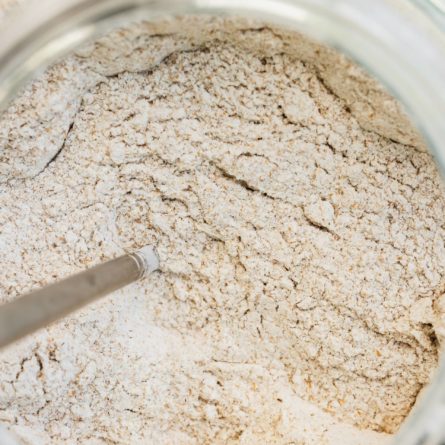
Wondering what’s actually inside insect flour? Insect flour is a fine, beige powder that looks remarkably like wholemeal wheat flour. It’s made from farmed insects that have been dried and finely ground — and behind that unassuming look, it packs a seriously interesting nutritional profile: 60 to 70% complete protein, iron, zinc, vitamin B12 and even omega-3s.
At our workshop in Vaux-le-Pénil, we’ve been working with this ingredient since 2012. Before you head to the practical cooking side, we thought a quick “what is it, what’s in it, what does it bring to the table” tour would be useful. Let’s dive in.
What is insect flour, exactly?
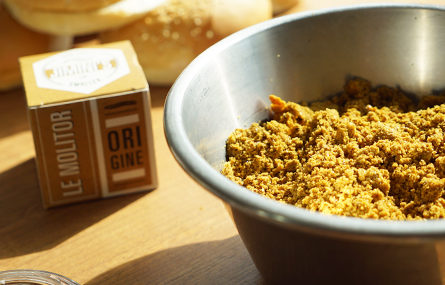
Insect flour (sometimes called insect powder or insect meal) is a fine grind obtained from whole dried insects. Contrary to what you might imagine, no shell or legs are visible in the finished product: the texture is as smooth as a regular wheat flour, and the colour sits somewhere between a sifted and a semi-wholemeal flour. We promise, nothing in there will remind you of an insect on a plate.
How it’s made
The process is fairly simple, but it takes real know-how to get a stable, homogeneous powder:
- Controlled farming in climate-regulated buildings (26-30 °C, 60-70% humidity) on plant-based substrates — wheat bran, vegetables, cereals.
- A 24 to 48-hour sanitary fast to clear the digestive tract.
- Cold-based slaughter followed by drying (hot air, freeze-drying or extrusion cooking, depending on the producer).
- Grinding and sieving to get a homogeneous powder, sometimes partially defatted for better shelf life (12 to 18 months at room temperature).
In terms of yield, it takes roughly 2.5 to 3 kg of fresh insects to produce 1 kg of flour. Insect flour has been authorised as food in the European Union since 2021, which is why you’re starting to spot it in a fair number of processed products.
Which insects go into insect flour?
Three species largely dominate the European insect-flour landscape — each with its own subtle flavour and nutritional fingerprint.
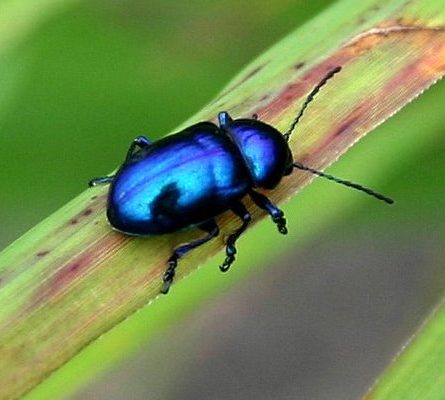
The mealworm (Tenebrio molitor)
Despite its “worm” name, it’s actually the larva of a beetle — the yellow mealworm beetle. It was the first insect species authorised as food in Europe in 2021. The flavour is mild, almost buttery, with a faint toasted-hazelnut note. It’s the species we use at Jimini’s in our protein bars made with insect flour — its neutral profile slides into anything, sweet or savoury.
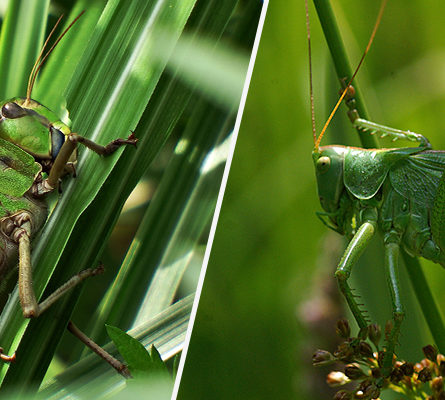
The house cricket (Acheta domesticus)
The star of baking. Cricket flour is slightly denser in protein (up to 70%) and leans into a subtle note of roasted hazelnut — perfect for pancakes, cookies, breads and sweet preparations. It’s also the most-eaten insect worldwide, long before it arrived in Europe: people have been munching crickets for ages in Southeast Asia and Mexico.
The migratory locust (Locusta migratoria)
The largest of the three (up to 6 cm) — and on average the highest in protein. The flavour is more pronounced, almost faintly herbaceous. Locust flour is less common in processed products than cricket or mealworm flour, but it has its place in some savoury preparations (meatballs, protein-enriched veggie patties).
Worth noting: a fourth species, the lesser mealworm or buffalo worm (Alphitobius diaperinus), is also used but remains marginal on the consumer market.
Nutritional benefits: why it’s interesting
This is where insect flour really stands out. If you had to sum it up in one sentence: it delivers as much protein as meat, with micronutrients that are rare elsewhere, and an almost neutral taste. Here’s the breakdown.
Complete protein (all 9 essential amino acids)
Per 100 g, you get 60-70 g of protein. That’s 2 to 3 times more than wheat flour (10-12 g), and more than a beef steak (22-26 g). More importantly, this protein is complete: it contains all 9 essential amino acids — the building blocks your body can’t make on its own and has to source from your plate.
On the digestibility side, you’re in the same league as egg — meaning you absorb just about everything you swallow. By comparison, pure wheat or rice protein on its own would lose about a third of its supply along the way. Not negligible when you’re trying to build or rebuild muscle.
Iron, zinc, vitamin B12: the rare trio
This is probably the most under-rated nutritional argument for insect flour. Per 100 g, you’ll find:
- 6 to 11 mg of iron in cricket flour — 2 to 4 times more than a beef steak — and in a form well absorbed by the body.
- 5 to 20 mg of zinc, depending on the species (cricket is richer than mealworm). Key for immunity, wound healing and testosterone.
- 2 to 10 µg of vitamin B12 — which you essentially only find in animal products. Precious if you’re cutting back on meat without going strictly plant-based.
Add in 10 to 20 g of fat, a non-negligible share of which is omega-3 and omega-6, in a fairly balanced ratio (varies by species and what they’re fed).
Chitin, a prebiotic fibre
Chitin is the special fibre that forms an insect’s exoskeleton. Once you eat it, it behaves like a prebiotic fibre: it feeds the friendly bacteria in your gut, a bit like the fibre in a prune or a leek does, but with its own signature. Early studies suggest a boost to digestive comfort and immunity. Nothing miraculous, but you’ll take it.
In short: how does it stack up against wheat and beef?
| Nutrient (per 100 g) | Insect flour | Wheat flour T65 | Beef steak |
|---|---|---|---|
| Protein | 60-70 g | 10-12 g | 22-26 g |
| Fat | 10-20 g | 1-2 g | 15-20 g |
| Fibre | 5-10 g | 2-3 g | 0 g |
| Iron | 3-11 mg | 1-3 mg | 2.6 mg |
| Vitamin B12 | 2-10 µg | 0 µg | 2.5 µg |
| Zinc | 5-20 mg | 0.8 mg | 4-5 mg |
Average data based on the typical ranges observed for the main insect species used in flour form.
Eco-footprint: the argument we love
This is probably what made us jump in back in 2012. For an equivalent protein supply, producing insect flour costs the planet much less than producing red meat. For 1 kg of protein produced, a cricket needs roughly:
- 2,000 litres of water, versus 22,000 L for beef — ten times less.
- 1.7 kg of feed, versus 10 kg for beef — far less cereal diverted to livestock.
- 15 m² of land, versus 200 m² for beef — a 13× factor on land use.
- 1 kg of CO₂ equivalent, versus 27 kg for beef — roughly 27 times fewer greenhouse gas emissions.
For the same protein supply, you’re dividing your environmental footprint by 10 to 25. Not bad for a little 16-21 mm cricket. It won’t flip everyone on its own — but stack up the protein yield, the micronutrients and the carbon footprint, and you start to see why insects are now considered a serious lever for feeding 10 billion humans by 2050. Tiny footprint, maxi flavour: that’s exactly what we’re aiming to deliver in every Jimini’s pouch.
Allergies: what to know before you taste
One important thing to keep in mind: insects belong to the same big biological family as crustaceans (shrimp, crab, langoustine) and dust mites. There’s a documented risk of cross-reaction — so if you’re allergic to seafood or dust mites, take it slow with insect flour.
In practice: if you’ve never eaten insects and you know you react to crustaceans, get medical advice before trying, or start with a tiny dose (half a teaspoon) to test. On the label side, you’ll always find an allergen mention on a quality insect-flour pouch — a good reflex to double-check.
Where you’ll find it today
Pure insect flour (in a pouch) is still a niche product. But it’s increasingly showing up in ready-to-eat finished products, which are often the easiest way in:
- Protein bars made with insect flour — the original application, ideal as a sports snack. We make ours from mealworm (Tenebrio molitor) for its round, easy flavour profile. → See our protein bars
- Protein-enriched pasta — an everyday classic with a protein lift, and a taste almost identical to regular pasta. → See our pasta
- Powder / flour in a pouch — to cook your own: pancakes, breads, cookies, smoothies, sauces. → See our powders and flours
When you pick a product, look at three things: the species used (clearly stated on the label), the traceability (European farming preferred) and the best-before date (ideally more than 12 months out — a good signal of freshness on arrival).
Ready to try it in the kitchen? We’ve written a dedicated guide: How to use insect flour: guide, dosages and 3 recipes — precise dosages, homemade recipes, substitution tips. The logical next step after this article.
FAQ
What’s the composition of insect flour?
Per 100 g of flour: 60-70 g of complete protein, 10-20 g of fat (including omega-3s), 5-10 g of fibre (the famous chitin), 5-10 g of minerals (iron, zinc, magnesium, calcium) and around 5 g of residual carbs. It’s one of the most protein-dense foods available today.
Which insects are used to make the flour?
Three main species: the mealworm (Tenebrio molitor), the house cricket (Acheta domesticus) and the migratory locust (Locusta migratoria). Mealworm and cricket largely dominate the consumer market, with cricket especially appreciated for its subtle hazelnut note that works everywhere in baking.
Does insect flour really have more protein than meat?
Yes — at equal weight and in dried form. 100 g of insect flour delivers 60-70 g of protein, versus 22-26 g for a beef steak. Of course, you don’t eat 100 g of flour in one sitting: typical use is 10 to 30 g per portion (as a partial substitute or a top-up). But on a calorie-equivalent basis, the protein supply is significantly higher.
Are there any allergies to watch out for?
Yes — insects share a biological kinship with crustaceans and dust mites. If you’re allergic to shrimp, crab, langoustine or dust mites, get medical advice before consuming insect flour. For everyone else, check the allergen mention on the packaging: it’s mandatory and systematic.
Is insect flour halal or kosher?
Halal: locusts and grasshoppers are accepted by most Muslim schools. For crickets and mealworms, it depends on the school — your best bet is to ask your referent imam. Kosher: only four species of locust are authorised by the Torah (Leviticus 11:22). In all cases, check the producer’s certification.
What’s the ecological impact of insect flour?
Very favourable. For an equivalent protein supply to beef, producing cricket flour requires roughly 10 times less water, 6 times less feed, 13 times less land and emits 27 times fewer greenhouse gases. It’s one of the strongest arguments for the food transition.
Can you make your own insect flour at home?
Technically, yes — starting from whole dried insects bought from a reputable seller (never wild insects: pesticide risk, parasites, unauthorised species). Dry 30 minutes at 100 °C in the oven, blend finely for 2-3 minutes, sieve. Store 6 months in an airtight jar away from light. The result is less fine than industrial flour, but it works for home recipes.
To go further
Insect flour is only one of the forms in which entomophagy lands on our plates. If you’re starting your exploration, we’d recommend:
- Eating insects: a complete guide to nailing your first taste — every question you ask yourself before getting started.
- How to use insect flour in the kitchen — 5 concrete applications with dosages and recipes.
- Insect powder vs insect flour: what’s the difference? — the semantic detour, with everything you need to choose.
At our workshop in Vaux-le-Pénil, we’ve been eating insect flour since 2012 — and we still haven’t turned back.




Be the first to post a comment